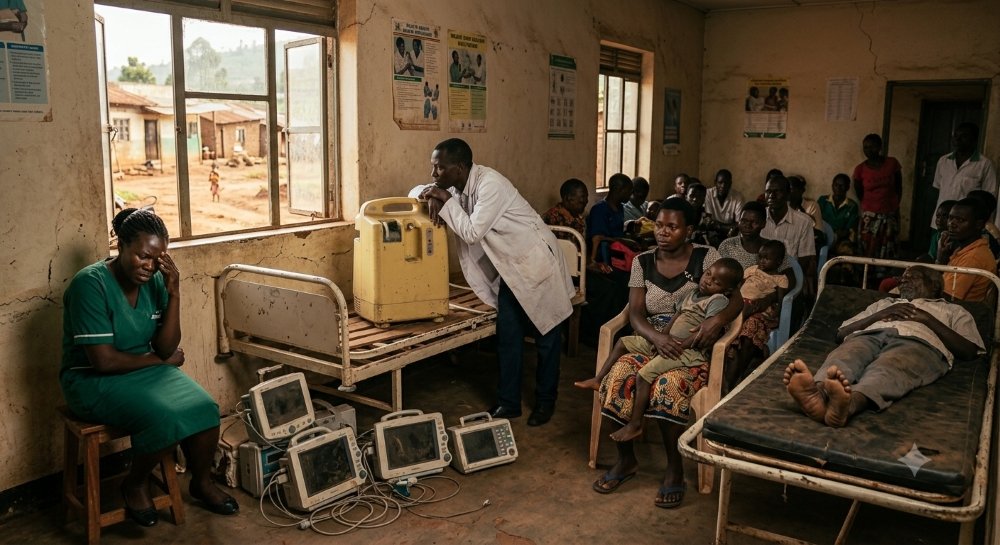

In many clinics across Uganda, when a infant incubator stops heating or a patient monitor screen goes dark, the immediate conclusion is that the machine has suffered a major hardware failure. However, technical audits reveal a different story: a significant percentage of device failures are not structural mechanical breakdowns, but operational errors resulting from a lack of user training.
Understanding the Training Deficit in Ugandan Facilities
Healthcare workers in resource-constrained settings face immense daily workloads, often forced to operate complex, foreign-manufactured biomedical devices without formal orientation.
- Operating in the Dark: Because more than 85% of medical devices in Uganda lack user manuals, nurses and laboratory technicians are routinely forced to learn machine operation through trial and error or informal handovers.
- High Failure Rates: Health facility assessments reveal that clinics lacking structured equipment orientation for staff experience significantly higher rates of device downtime compared to facilities with trained personnel.
- Preventable Wear and Tear: Simple daily oversights, such as failing to clean oxygen concentrator intake filters, improper battery charge cycles, or using incorrect chemical disinfectants on delicate transducer probes, cause a massive share of avoidable damage.
“A medical device is only as reliable as the clinician operating it. True healthcare technology management must extend beyond the repair bench directly onto the ward.”
Care Bridge’s Hands-On Capability Building
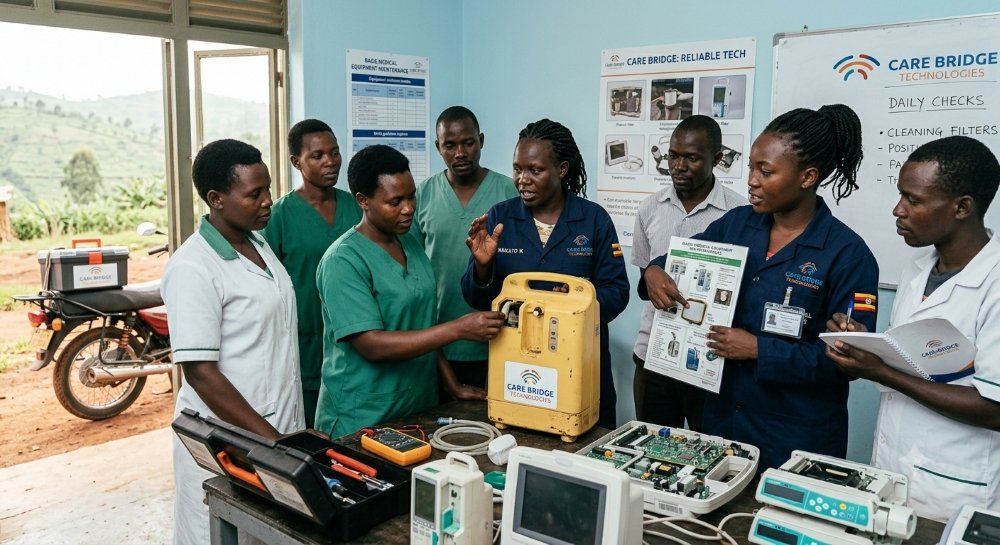
At Care Bridge Technologies, technical repair is only half of the solution. Every service engagement includes practical, on-site capacity building tailored for nurses, lab technicians, and clinical officers.
- Daily Operational Protocols: Training frontline staff on simple 5-minute daily maintenance checks, such as filter inspections, cable management, and line-voltage checks, that prevent up to half of common breakdowns.
- Handling & Storage Standards: Establishing clear protocols for equipment storage, battery care, and sterilization to protect sensitive electronics from premature degradation.
- First-Line Diagnostics: Educating staff to quickly distinguish between minor operational setup issues (such as loose lead connections or tripped breakers) and true hardware failures requiring an engineer.
Investing in health worker training significantly reduces unnecessary service calls, extends asset lifespan, and ensures critical machinery is ready the moment a patient’s life depends on it.