
Access to healthcare services in major urban hubs like Kampala differs significantly from rural Health Centre IIIs and IVs spread across Uganda’s districts. While urban hospitals contend with scheduling routine maintenance, rural health facilities face an even harder barrier: complete technical isolation.
The Rural Technical Void
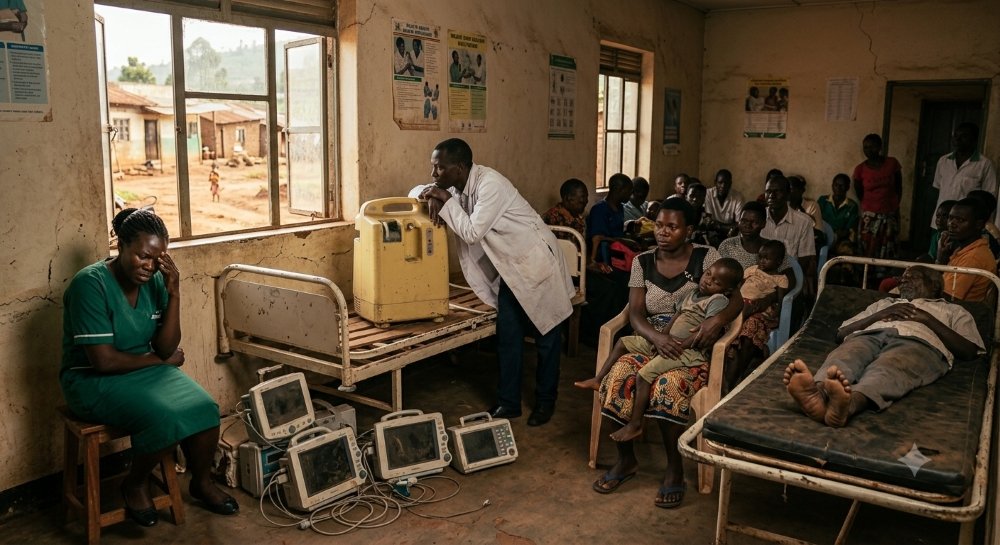
When vital equipment, such as a centrifuge, phototherapy unit, or suction pump, breaks down in a rural health center, the facility faces difficult choices:
- High Transport and Transit Risks: Facilities must arrange to transport heavy, sensitive hardware over long distances on unpaved roads to major urban centers, incurring high transit costs and risking further physical damage to the equipment.
- Protracted Downtime: Equipment sent away for repair often remains out of service for months at a time, leaving entire communities without basic diagnostic or therapeutic services.
- Grid Volatility: Rural facilities experience severe power fluctuations, voltage spikes, and sudden blackouts, which degrade unprotected medical electronics at an accelerated rate.
Last-Mile Engineering: The “Tech-on-Call” Model
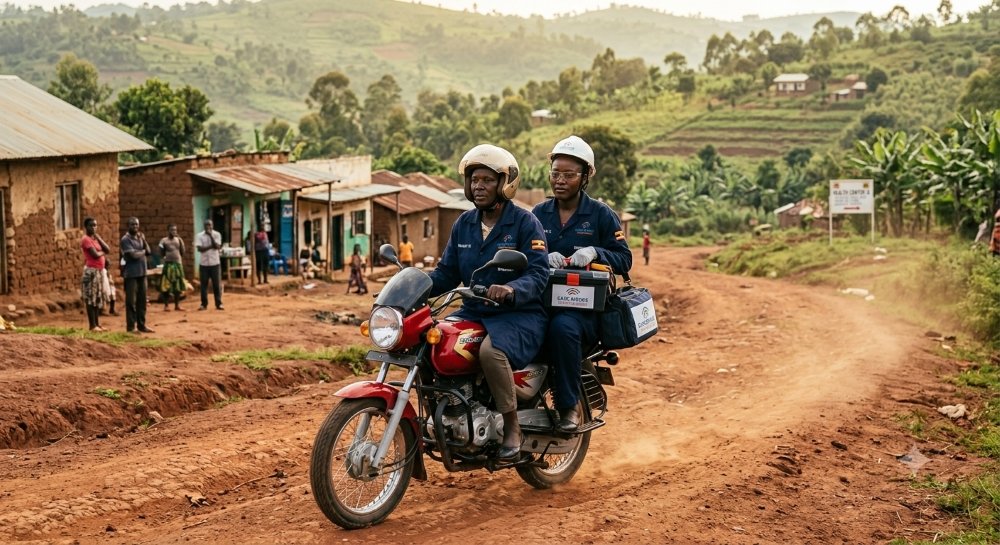
To close this geographic gap, Care Bridge Technologies operates a mobile response framework designed specifically for last-mile healthcare settings.
[Mobile Field Engineers] ──(Boda / Field Vehicle)──> [Rural HC III / HC IV] ──> [On-Site Repairs & Calibration]
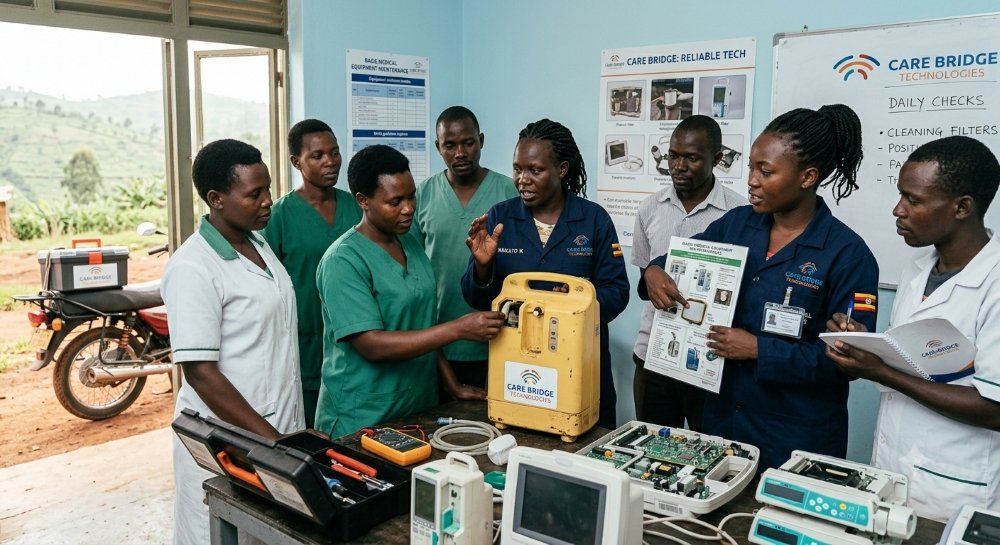
Equipped with specialized mobile toolkits, portable testing instruments, and high-wear replacement parts, field engineers travel directly to remote facilities, performing repairs on-site inside the clinic.
Impact at the Community Level
- Eliminating Transit Hassles: Servicing equipment directly at the health facility removes transportation costs and eliminates the risk of transit-induced damage.
- Restoring Essential Care Rapidly: Critical assets like infant warmers and oxygen delivery systems are restored to full operation in hours instead of months.
- Infrastructure Stabilization: Field engineers inspect facility power points, install inline surge protection, and advise administrators on how to shield equipment from electrical fluctuations.
By bringing specialized biomedical engineering directly to village health centers, Care Bridge Technologies ensures that geographic location never determines whether a patient has access to safe, working medical technology.