
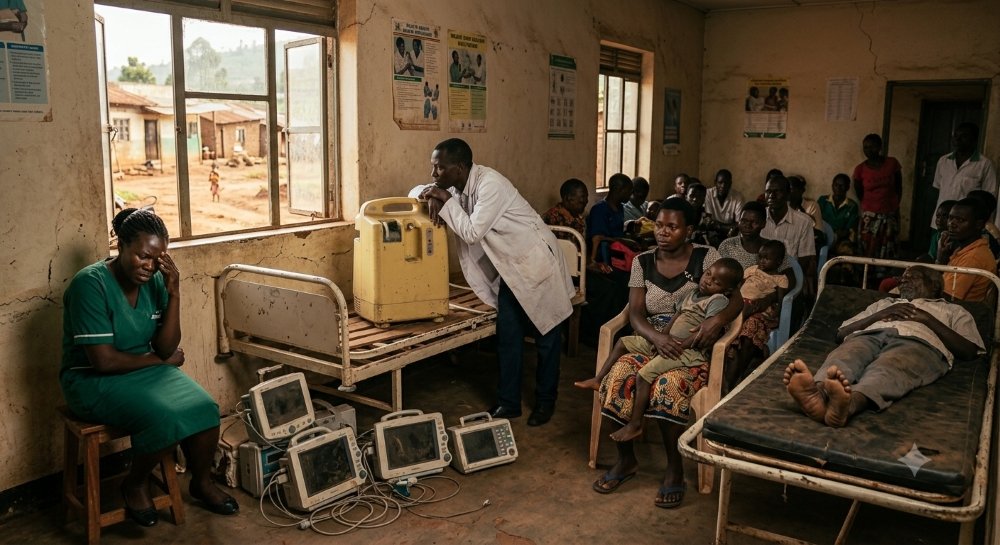
When a patient arrives at an emergency department or maternal health clinic in Uganda, the expectation is simple and non-negotiable: life-saving medical technology should work. Yet across health centers nationwide, a quiet operational crisis compromises care daily. Up to half of the medical devices in many facilities sit non-functional, leaving clinical teams stranded when minutes matter most.
The Reality in Numbers: Uganda’s Equipment Challenge
Access to functional medical technology remains a primary structural bottleneck in Uganda’s health system. Across both public and private sectors, healthcare delivery is crippled by widespread hardware failure, long repair delays, and an absence of structured technical support.
- High Rates of Non-Functional Gear: Studies across regional and tertiary facilities in Uganda show that between 34% and 50% of medical equipment is non-functional or faulty at any given time. Critical units – including surgical theatres, maternity wards, and diagnostic laboratories – frequently operate well below capacity due to uncalibrated or broken assets.
- The Missing Manuals Problem: Over 85% of medical devices in Ugandan health facilities lack operational or technical service manuals. Without manufacturer documentation, internal teams cannot perform standard maintenance or diagnose minor electronic faults.
- Resource and Personnel Shortages: A vast majority of health centers (particularly HC III and HC IV levels) operate without a single dedicated Biomedical Engineer or Technician (BMET) on site.
- Preventable Systemic Failures: Most equipment breakdowns do not stem from permanent structural damage, but rather from uncalibrated usage, unstable power grids, improper handling, and a complete absence of routine servicing.
From Reactive “Break-Fix” to Proactive Management
The traditional response to equipment breakdown across Ugandan health facilities is strictly reactive: wait for a vital asset—such as an ultrasound scanner, patient monitor, or oxygen concentrator—to fail completely, then scramble to locate an external technician. This reactive approach leads to weeks, or even months, of equipment sitting idle in facility storerooms.
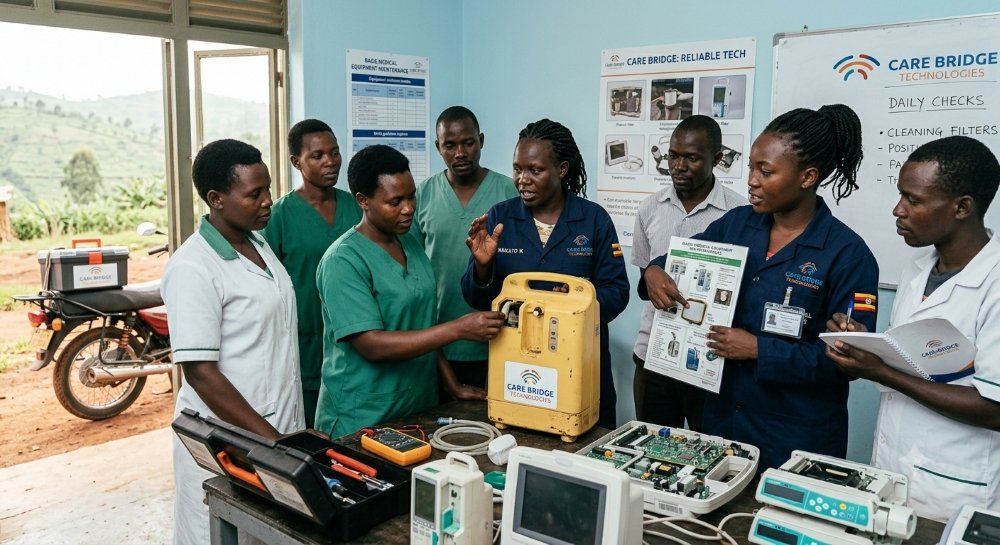
Care Bridge Technologies replaces this costly cycle with Scheduled Preventive Maintenance (SPM) and predictive service agreements.
Bridging the Med-Tech Gap
By establishing structured maintenance agreements, Care Bridge Technologies provides health facilities with a sustainable pathway to equipment reliability:
- Routine Safety & Calibration Audits: Testing devices regularly to ensure they function strictly within safe international and Ministry of Health performance guidelines.
- Predictive IoT Monitoring: Utilizing smart sensor modules to detect power surges, thermal stress, and duty-cycle strain before hardware undergoes total failure.
- Rapid On-Demand Dispatch: Mobile biomedical field teams equipped to reach peri-urban and rural clinics quickly to restore failing systems.
When medical equipment remains operational, health facilities reduce capital expenditure on replacement hardware, clinicians work with confidence, and patients receive uninterrupted care.